Clear Projection Screen Film for Homes & Businesses

Turn any glass surface into a rear-projection screen that stays transparent when not in use. No dedicated screen, no lost glass. Free consultation.

Call or Text 609-929-7211

What Clear Projection Screen Film Does

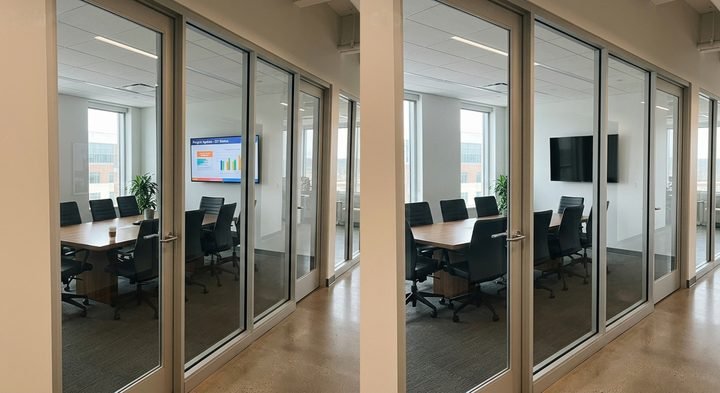
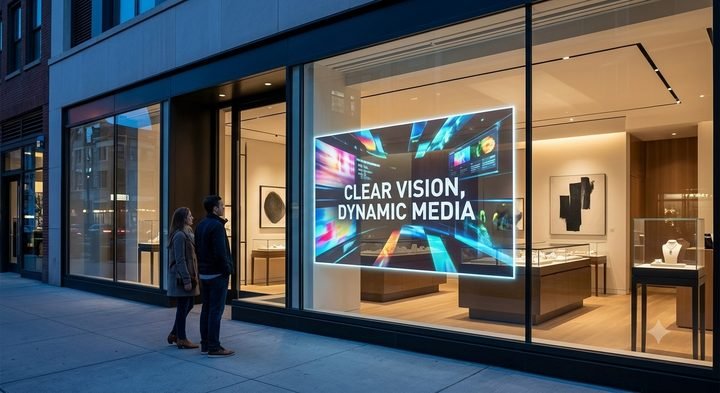
CoolVu projection screen film transforms existing glass into a rear-projection display surface. When a projector is active, the film captures and displays the projected image on the glass with high visibility from the viewing side. When the projector is off, the film remains optically transparent, the glass looks and functions as normal window or partition glass.

The film is applied to the interior surface of existing glass with no structural modification. It is compatible with standard short-throw and ultra-short-throw projectors and supports HD and 4K content. Applications include retail storefront displays, corporate lobby signage, museum and gallery installations, conference room presentations, and hospitality feature walls. The dual-use capability, display when active, transparent glass when inactive, eliminates the need for dedicated screens that block light and views.

Contact Us today for a free estimate and consultation!

Phone

609-929-7211

Serving Princeton & Central New Jersey. Free consultation by phone or on-site. Call or text anytime.

    Common Questions

    Is projection screen film worth the investment?
    Projection screen film turns existing glass into a dual-use surface: a display when the projector is on, and normal transparent glass when it is off. This eliminates the cost and space of dedicated projection screens, digital signage displays, or video walls while preserving the glass function. For retail storefronts, it means window displays that can show video content during business hours and return to transparent glass after hours. For corporate lobbies, it replaces TV monitors with a seamless glass display. The film is applied to existing glass in a single visit with no structural modification, making it significantly less expensive than replacing glass with integrated display panels.
    How does projection screen film work?
    The film contains a micro-particle layer that captures projected light and makes it visible from the viewing side. A rear projector (positioned behind the glass) projects an image onto the film surface. The micro-particles scatter the projected light toward the viewer, creating a visible image on the glass. When no light is being projected, the micro-particles are not visible and the glass appears transparent. The film works with standard short-throw and ultra-short-throw projectors and supports HD and 4K content resolution. Image brightness and contrast depend on the projector lumens and ambient light conditions.
    Is the glass really transparent when the projector is off?
    Yes. When no image is being projected, the film is optically transparent and the glass looks and functions as normal glass. The micro-particle layer that captures projected light is not visible to the naked eye when inactive. You can see through the glass clearly from both sides. This is the key advantage over traditional projection screens or digital signage: when the display is not in use, you have a normal glass surface rather than an opaque screen blocking light and views.
    What type of projector is needed?
    Projection screen film works with standard rear-projection setups. Short-throw and ultra-short-throw projectors are recommended because they can be positioned close to the glass, minimizing the space required behind the screen. The projector must be positioned on the opposite side of the glass from the viewers. Projector brightness (measured in lumens) should be matched to the ambient light conditions in the space, brighter environments require higher-lumen projectors for visible image quality. We assess the space during the free consultation and recommend projector specifications based on the glass size and ambient light.
    How is projection screen film installed?
    The film is applied to the interior surface of existing glass by a trained CoolVu installer. The glass is cleaned, the film is precision-cut to the projection area dimensions, and applied with a solution for smooth positioning before being squeegeed for a bubble-free bond. The film can cover the entire glass pane or just the projection zone. Installation is completed in a single visit. The projector, mount, and media source are typically installed separately by the client or an AV integrator, we coordinate on film placement to ensure proper alignment with the projection geometry.
    Can projection film be used on exterior-facing storefront glass?
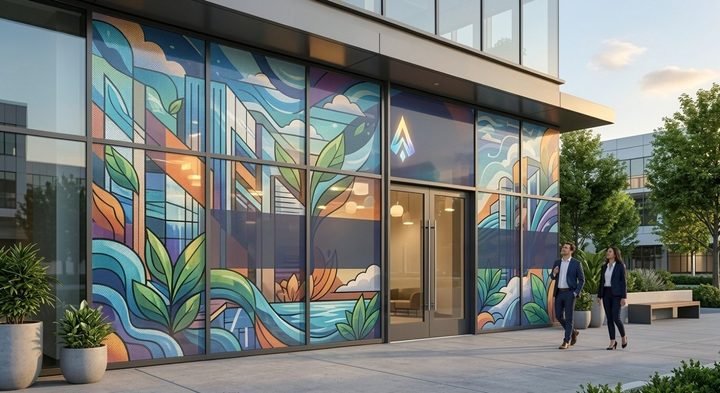
    Yes, and this is one of the most common commercial applications. Retail storefronts use projection film on street-facing glass to display product videos, promotions, and branding content visible to pedestrians and traffic. The projector is positioned inside the store, projecting onto the film from behind. During business hours, the storefront shows dynamic content; after hours, the glass returns to transparent. For best results on exterior-facing glass, high-lumen projectors are recommended to compete with ambient daylight. Evening and nighttime displays are highly effective with standard projector brightness.
    How long does projection screen film last?
    Projection screen film is engineered for long-term commercial use. The micro-particle layer maintains its projection-capture properties indefinitely under normal conditions. The film does not yellow, haze, or lose transparency over time. It is cleanable with standard glass cleaning solutions. The film carries a manufacturer warranty. The projector and media source have their own lifecycles independent of the film, the film can be used with multiple projector replacements over its lifetime.
    Scroll to Top